Russian President’s Planned Visit Raises Legal and Diplomatic Questions
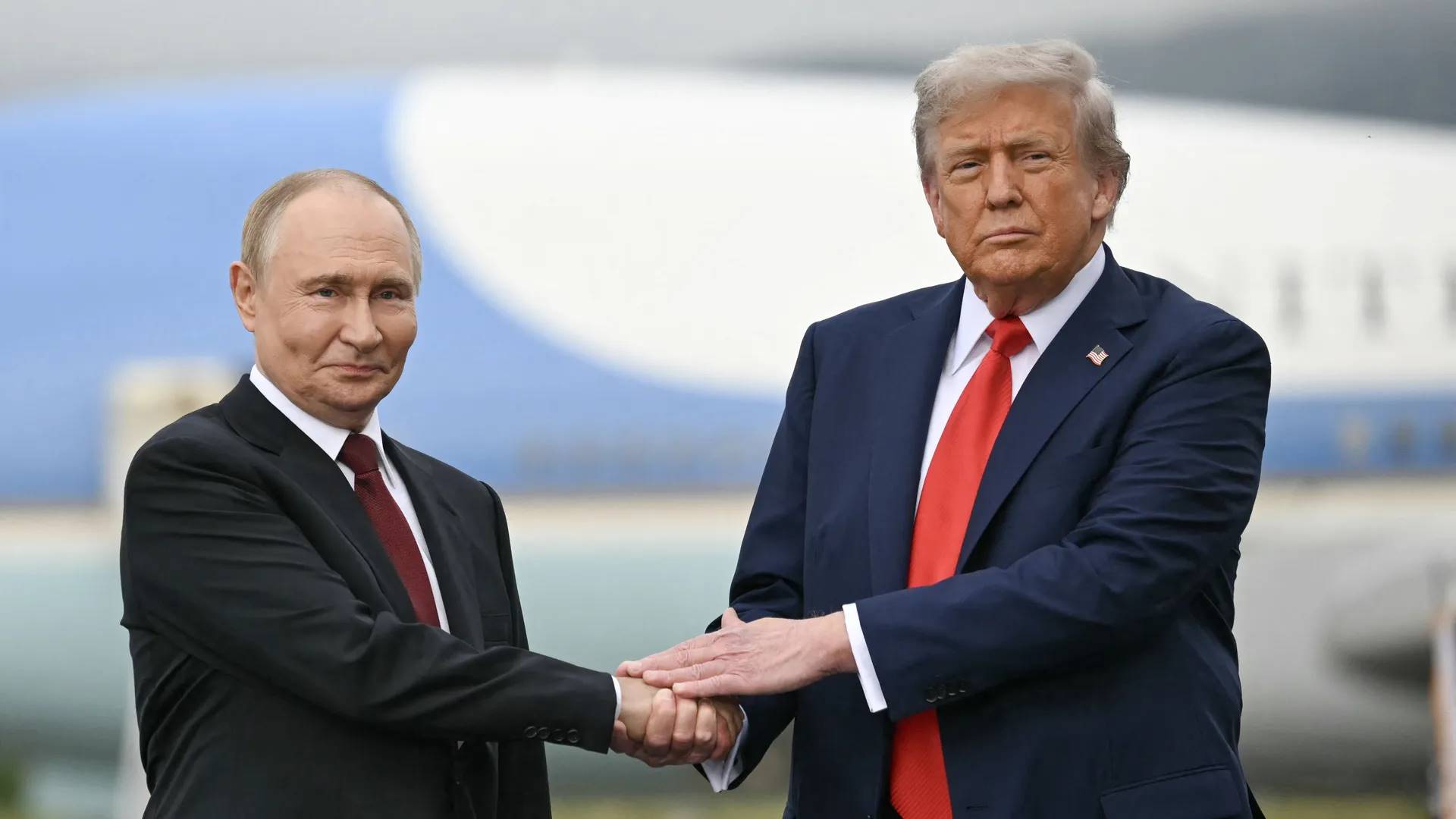
Russian President Vladimir Putin is preparing for a high-profile visit to Hungary to meet U.S. President Donald Trump for a second round of peace talks aimed at resolving the war in Ukraine. The two leaders last met in Alaska in August 2025, but that summit yielded no breakthrough.
However, the looming question remains: How will Putin—who is wanted by the International Criminal Court (ICC) for alleged war crimes—make the journey to Budapest without being arrested?
Putin: A Fugitive Under ICC Warrant
In 2023, the ICC issued an arrest warrant for Putin, citing his alleged involvement in the unlawful deportation of Ukrainian children during the ongoing war. As a result, any member state of the ICC is legally obligated to detain him if he enters their territory—including their airspace, which is also considered sovereign under international law.
This creates a complicated geopolitical puzzle: how can a sitting head of state with an international arrest warrant travel freely to Europe?

Hungary’s Shifting Relationship with the ICC
Technically a Member, But With One Foot Out the Door
Hungary is still an ICC signatory, at least on paper. But Prime Minister Viktor Orbán has made clear that the country intends to withdraw from the Rome Statute—the treaty that established the ICC.
This intention was publicly announced during a visit by Israeli Prime Minister Benjamin Netanyahu in April 2025. Netanyahu, like Putin, is also subject to an ICC arrest warrant for alleged war crimes in Gaza.
Hungarian lawmakers passed legislation in May 2025 to begin the formal withdrawal process, which would become legally effective one year after notification is delivered to the United Nations. Until then, Hungary remains technically bound by the ICC’s rules—but Orbán’s government has openly signaled it will not enforce them.
Hungarian Foreign Minister Péter Szijjártó recently reiterated that Hungary is a “sovereign state” and will host Putin with respect and protection, ensuring a smooth visit and safe departure.
The Airspace Dilemma: Can Putin Be Intercepted Mid-Flight?
Geography and Politics Complicate Putin’s Route
Although Hungary may roll out the red carpet, Putin’s flight path to Budapest is another matter entirely.
If Putin flies from Moscow, he would need to pass through the airspace of countries that are ICC members—and therefore legally obliged to arrest him.
- The Baltics (Estonia, Latvia, Lithuania): These countries are on high alert due to frequent airspace violations by Russian military aircraft. Overflying them is highly risky.
- Poland: A strong critic of the Kremlin and a staunch NATO ally, Poland has warned of possible deep Russian attacks and is unlikely to permit overflight.
- Slovakia: Led by a pro-Russia populist, Robert Fico, Slovakia may be more lenient, but Putin would still need to cross Polish airspace to reach it.
Even friendly Belarus, which lies between Russia and Ukraine, may not offer a sufficient buffer to avoid EU and NATO airspace. In short, a direct route appears full of diplomatic hazards.
Learning from Netanyahu: A Circuitous Flight Path?
Putin may take inspiration from Israeli Prime Minister Netanyahu, who recently navigated around ICC member states en route to the United Nations General Assembly in New York.
Netanyahu’s “Wing of Zion” aircraft took a southern route, avoiding French and Spanish airspace, and limiting overflight to brief entries over Greece and Italy before heading across the Atlantic.
Putin might adopt a similar strategy:
- Georgia: A Rome Statute signatory but with a pro-Russian political lean under the Georgian Dream party, might allow Putin to pass unchallenged.
- Türkiye (Turkey): Not a member of the ICC and historically a neutral ground for Russia-Ukraine talks. It could be a reliable stop or transit point.
- The Balkans and Greece: After crossing Türkiye, Putin could move through Balkan states and into Hungary, minimizing risk.
While risky, such a southern route avoids the most hostile ICC territories and leverages neutral or friendly partners.

Has Putin Traveled Since the ICC Warrant Was Issued?
Despite the warrant, Putin has made a few calculated international trips, all carefully planned to avoid legal trouble:
- Mongolia (2024): An ICC member but a long-time Russian ally, Mongolia welcomed Putin with a traditional military parade and did not act on the arrest warrant.
- United States (August 2025): Putin attended the Alaska summit with Trump. Since the U.S. is not an ICC member, he faced no legal risk.
- China and Central Asia: Countries like China and Tajikistan have hosted Putin for events and summits, posing no threat of arrest due to their non-membership in the ICC or pro-Russia stance.
These trips suggest Putin is still willing to travel abroad—but only where he feels entirely secure.
Will Putin Ever Face Justice at The Hague?
Despite the ICC’s arrest warrant, the likelihood of Putin being detained remains extremely low—at least while he holds power.
While international law permits his arrest in many countries, the ICC lacks its own enforcement mechanism. It must rely on member states to carry out detentions, and political realities often outweigh legal obligations.
A handful of world leaders have faced trial in The Hague:
- Charles Taylor (Liberia): Convicted in 2012 for war crimes.
- Slobodan Milosevic (Serbia): Extradited by a post-war Serbian government after losing power.
- Rodrigo Duterte (Philippines): Voluntarily surrendered to The Hague to face charges in 2025.
For Putin to be extradited, there would likely need to be a drastic change in Russia’s political landscape, perhaps with a future administration willing to hand him over.
Conclusion: Putin’s Travel Plans Still Shrouded in Uncertainty
As preparations continue for the Trump-Putin summit in Hungary, the Russian president’s journey remains a diplomatic and legal minefield.
While Hungary is unlikely to detain him, the challenge lies in navigating ICC-compliant airspace. A roundabout southern route, avoiding hostile countries, seems the most viable—especially if Turkey, Georgia, or other non-aligned nations cooperate.
Whether this summit will produce a meaningful outcome for Ukraine remains to be seen, but one thing is clear: Putin’s international mobility is no longer a given.
Would you like a visual map of possible flight paths or a timeline of Putin’s ICC-related travels?

